Property Management Fee Book and Workbook
Work through your fee schedule with a reference for each decision and a workbook for your own numbers.
For owners and operators of US residential property management companies who set pricing and service scope.
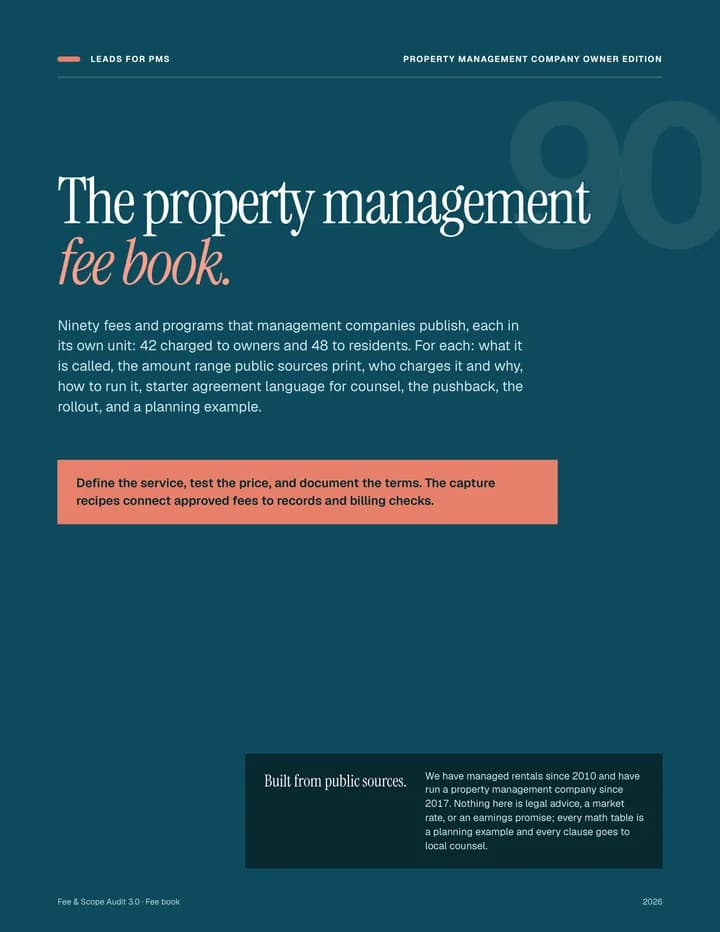
275-page PDF + 12-sheet XLSX workbook
One business and its staff. Purchase terms and refund remedies.
12 sheets, including a complete 90-row fee checklist.
Two files for reviewing the whole fee schedule.
Examine what you charge, what is included, what delivery costs, and which changes deserve further review.
The 275-page reference
- 90 fees and programs
- 13 six-page program chapters and 77 two-page fee cards.
- 12 sections
- Six for charges to owners and six for charges to residents: 42 owner-paid and 48 resident-paid entries.
- Master fee schedule
- Every entry on one list, with payer, trigger, amount and capture source.
- Appendix A: fee capture
- Seven software platforms and 12 capture recipes for planning an operating process.
- Appendix B: sources by unit
- The public sources each unit rests on, listed by unit number.
The 12-sheet workbook
Review every book entry, then work through your company inputs, service scope, costs and revenue scenarios.
- Editable input cells and protected formulas
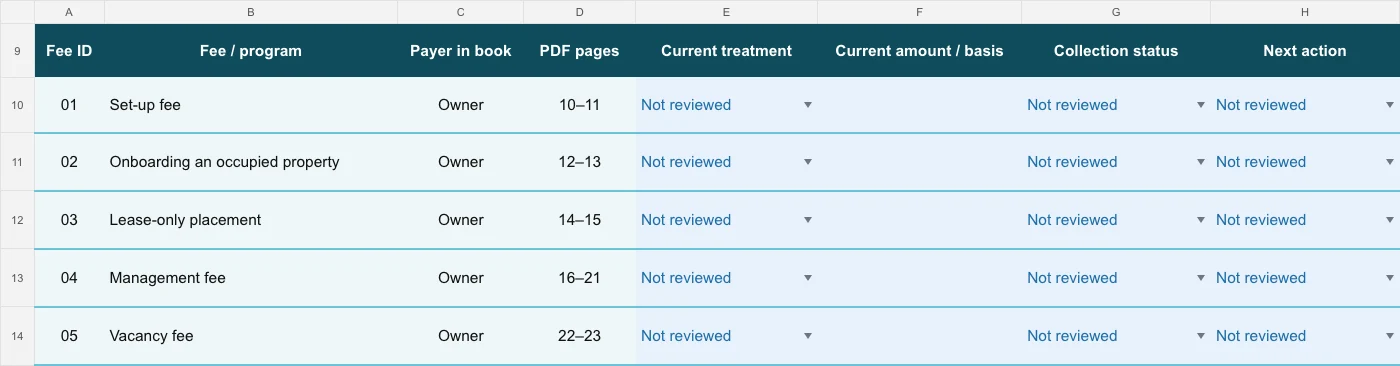
- Complete 90-row fee checklist with PDF page references
- 15 sample charges from the book to replace or investigate
- 40 current-fee inventory slots and a time-cost audit
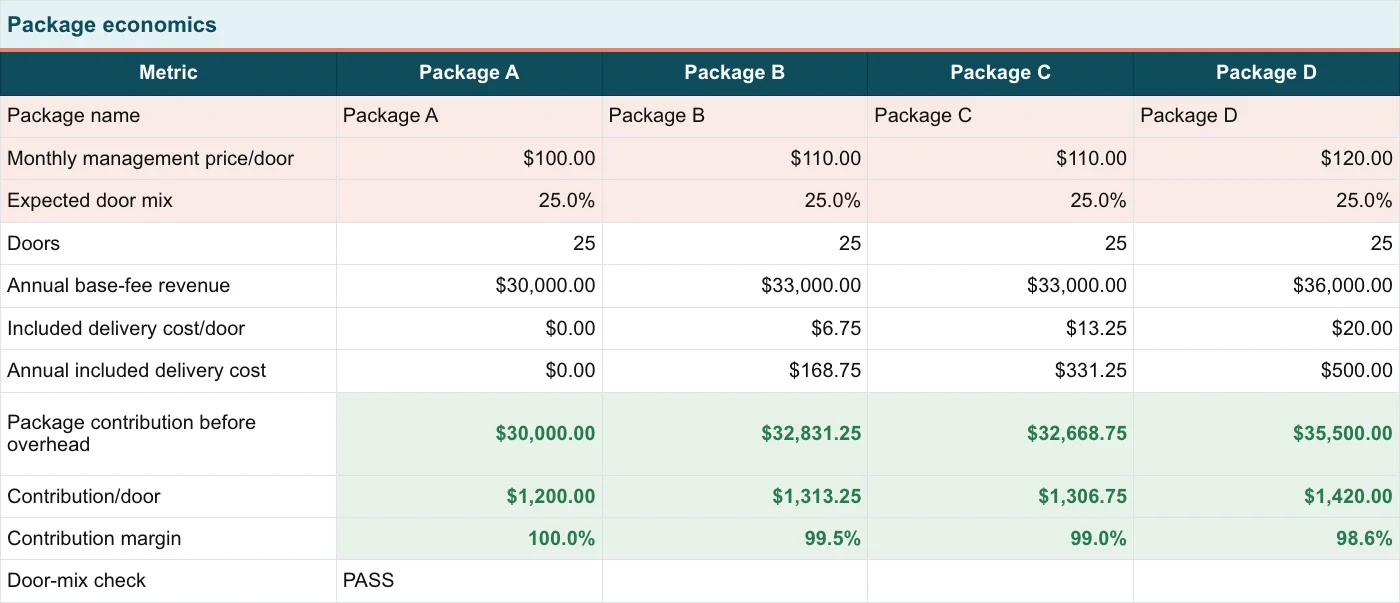
- Four packages you define, Package A to Package D, and revenue scenarios
- Disclosure review, rollout planning and a dashboard
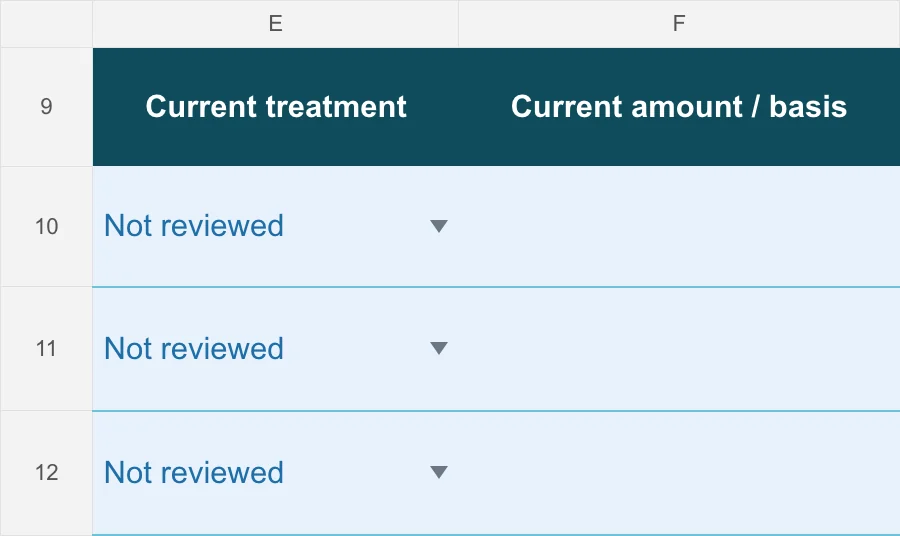
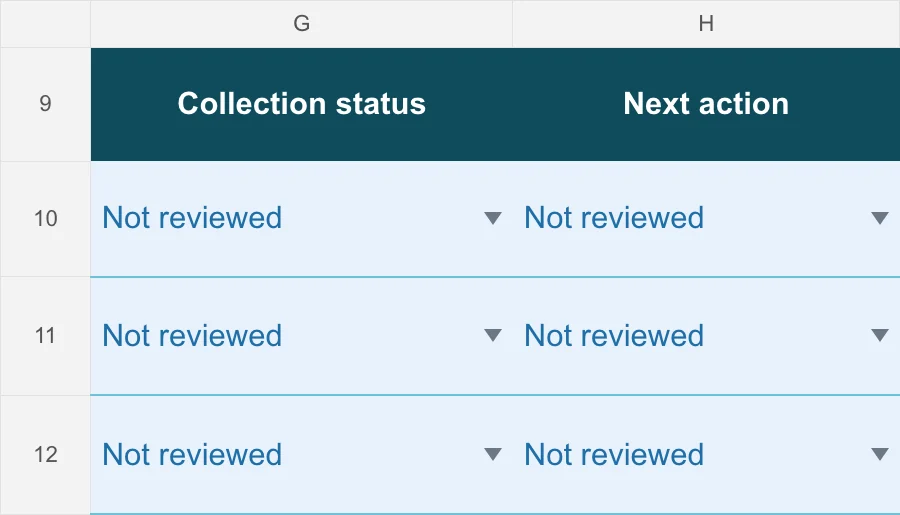
All 90 checklist entries start as Not reviewed. Record what you charge, include, do not offer or find not applicable. The 15 sample charges demonstrate the modeling tools; full written guidance is in the PDF.
See the actual working pages.
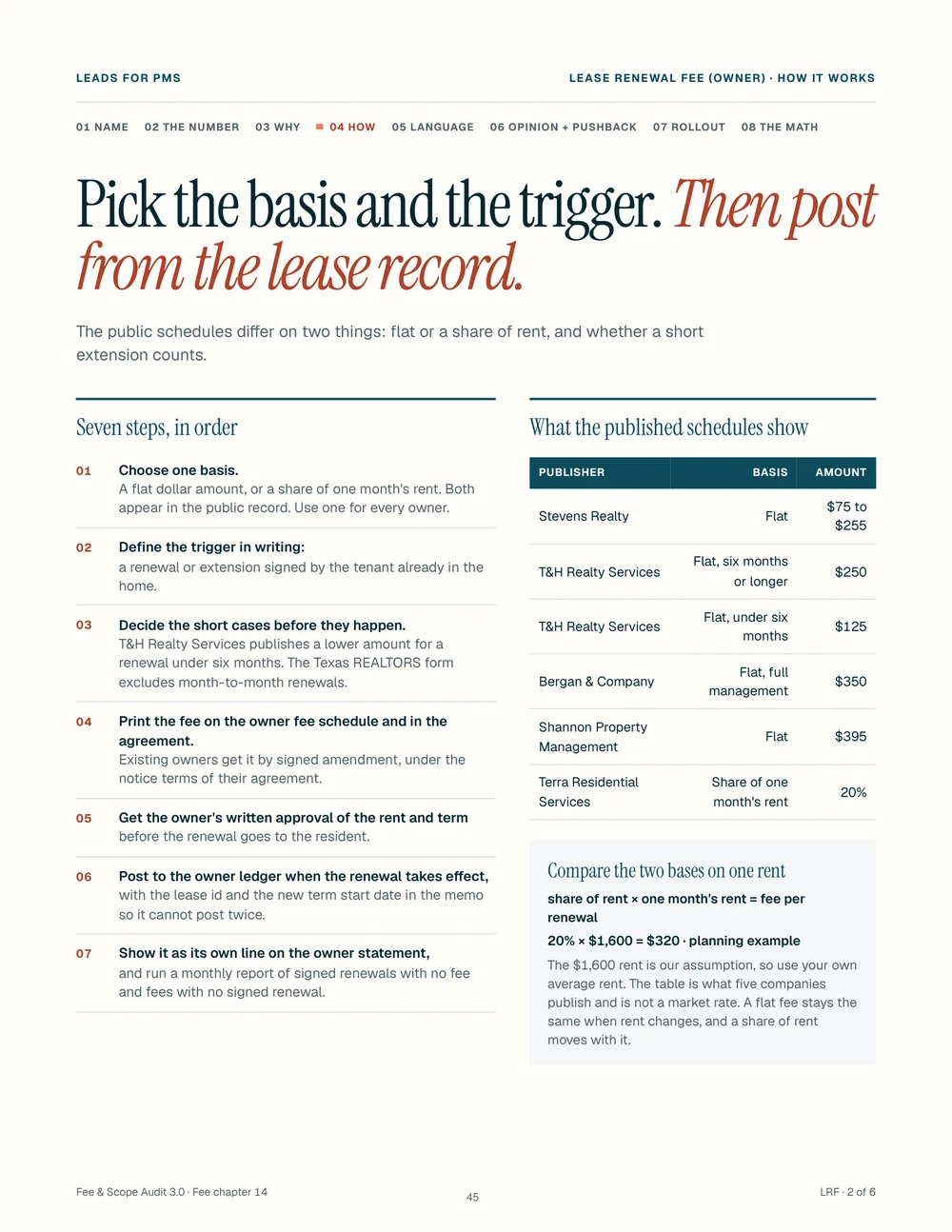
Selected excerpts from the included files. Workbook figures are synthetic examples, ready to replace with your own records. Amounts on the book page come from the published schedules it cites.
Need help opening the files? Read the Start Here guide.
A fee decision needs more than a number.
Each entry covers what the charge is called, the number (payer, trigger, amount, frequency and an example at 100 doors), why, how, starter agreement language for counsel, pushback, rollout and the math.
The 13 program chapters give more room to how the amount is set and to the pushback. The 77 fee cards fit the same parts on two pages and add a capture block naming the software record that shows the trigger.
The list of charges was built from published fee schedules, management agreements, leases and fee disclosures, statutes and enforcement actions. A charge is in the book only if it appears in at least two unrelated public sources or in a statute or enforcement action. We have managed rentals since 2010 and have run a property management company since 2017.
Define the charge
What it is called in the public sources, who pays, and the event that triggers it.
Read the number
The amount range the cited sources print, how often it applies, and a planning example at 100 doors.
Weigh the case and the pushback
Why companies charge it, how to run it, and the objections you will hear.
Plan the terms and rollout
Starter agreement language for counsel, the rollout order, and on fee cards the software record that captures the charge.
Put your own records to work.
Move from the reference to your actual business. The workbook follows the review from baseline to implementation.
- 1
Build your baseline
Review all 90 entries, record their current treatment, then replace the sample inputs and build your baseline.
- Start Here
- Fee Checklist
- Company Inputs
- Candidate Fee Library
- Current Fee Inventory
- 2
Test the fee decision
Separate promised work from additional services, examine costs and compare the numbers.
- Included-vs-Add-On Matrix
- Time-Cost Audit
- Package Builder
- Revenue Scenarios
- 3
Review and roll out
Identify what needs agreement review, assign the work and track readiness.
- Agreement-Disclosure Review
- Rollout Planner
- Dashboard
The result can be a new price, a clearer package, a service you keep included, or a decision not to charge. A positive spreadsheet result is one part of that decision.
Read a complete example before buying.
These free guides include the method and worked numbers. The bundle adds the broader reference and reusable workbook.
Audit your fee schedule
Build an inventory, review collection and choose what deserves a closer look.
Price maintenance coordination
Account for staff time and see the difference between markup and margin.
Evaluate a resident benefit package
Work through vendor cost, service delivery and enrollment scenarios.
Plan the overall fee review
Follow a 100-door example, including the effect of owner departures.
Common purchase questions.
Sample prices and scenarios are planning inputs. Your service scope, actual costs, customers and applicable requirements determine what fits.
What files are included?
The bundle contains a 275-page PDF fee book and a macro-free XLSX workbook with 12 sheets. The book holds 90 fees and programs in 12 sections: 13 six-page program chapters and 77 two-page fee cards, 42 paid by owners and 48 paid by residents.
How was the list of fees built?
The list of charges was built from published fee schedules, management agreements, leases and fee disclosures, statutes and enforcement actions. A charge is in the book only if it appears in at least two unrelated public sources or in a statute or enforcement action. Each unit names its sources. Amount ranges are what the cited sources print, and every math table is a planning example.
Does the workbook contain all 90 fees?
Yes. The Fee Checklist has 90 rows, one for every entry, with its ID, title, payer and PDF page reference. All start as Not reviewed, with fields for current treatment, amount and basis, collection status, next action and owner/notes. The separate Candidate Fee Library has 15 sample charges from the book with synthetic numbers. Full written guidance remains in the PDF.
Does the workbook use macros?
No. It uses spreadsheet formulas, with editable inputs and formula protection to reduce accidental changes. You will need software that can open XLSX files. The workbook was recalculated and tested in LibreOffice. It has not been tested in Microsoft Excel or Google Sheets.
Can we use the agreement language immediately?
The book supplies starter agreement language for your counsel to draft from. Your actual agreements, service scope and local requirements determine what can be implemented. Take the relevant terms through local agreement review before using them.
Are software integrations included?
Appendix A covers fee capture across seven property management software platforms, with 12 capture recipes. These are implementation references. The bundle does not install integrations or post charges to your accounts.
Should we add every fee in the book?
No. Use the entries to investigate relevant services and reject unsuitable ones. You may keep a service included, revise its price or scope, investigate a new service, or decide not to charge. The book does not guarantee earnings, enrollment, retention or legal availability of a fee.
Is this for landlords comparing management companies?
The primary reader is the management company owner or operator setting the fee schedule. The workbook is organized around company service costs, pricing decisions and operating responsibilities.
Work through your next fee decision.
Get the full 90-entry reference and the 12-sheet workbook, including the complete fee checklist and tools for your own numbers, service scope and rollout.
275-page PDF + XLSX workbook
Sold by Kinwell Consulting, Inc. One-time payment; applicable tax is shown at checkout.